
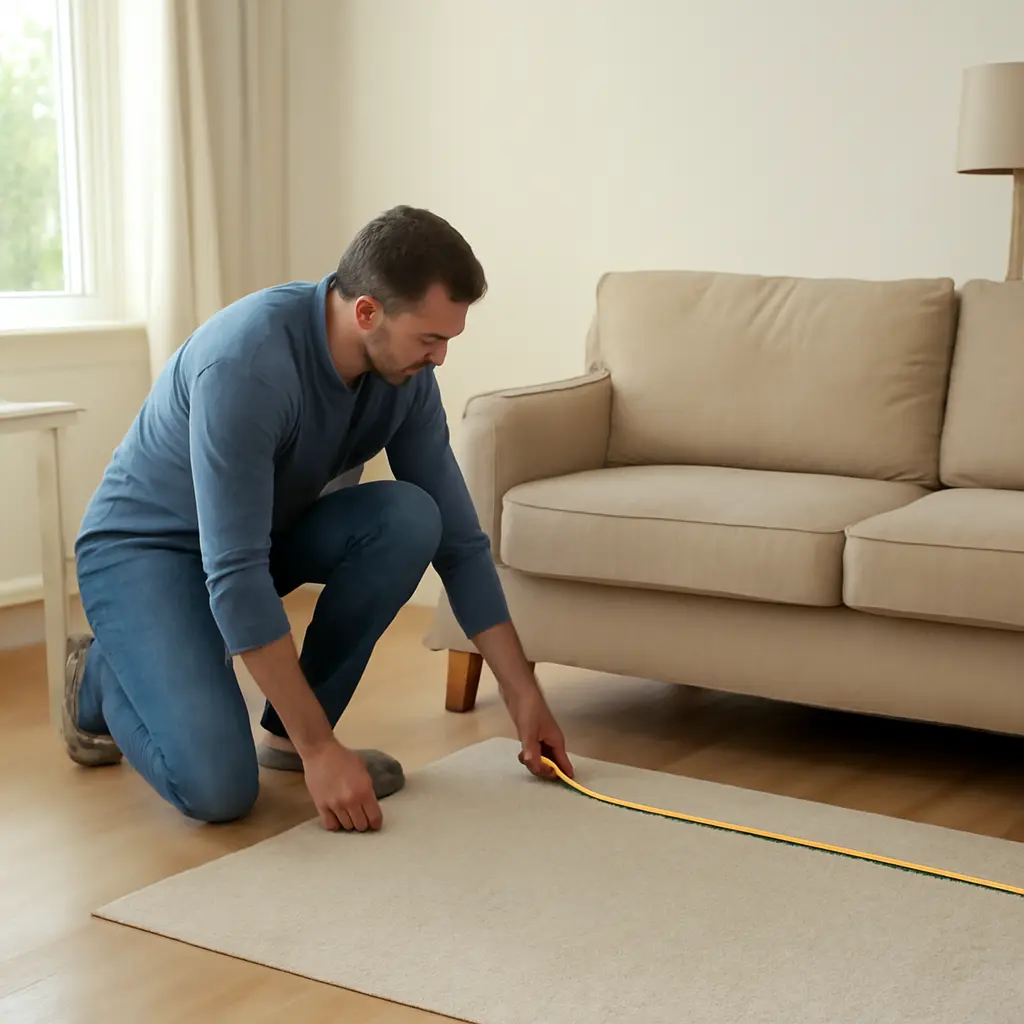
Furniture proportion—the relationship between a piece’s dimensions, visual weight, and the room around it—often matters more to a home’s comfort and appearance than its price. A well-scaled, affordable sofa can make a room feel balanced, while an expensive oversized one can block circulation and overwhelm it. Interior-design guidance from the National Kitchen & Bath Association emphasizes planning clearances and traffic flow, and the U.S. Environmental Protection Agency reports that Americans spend about 90% of their time indoors, making the usability of indoor spaces consequential. Measure rooms and doorways, assess furniture scale and layout, and prioritize essential comfort before choosing finishes or paying a premium.
Furniture proportion and room fit determine how well a home works
Proportion in home furnishing is the way furniture size and visual presence relate to room dimensions, ceiling height, other objects, and the people using the space. There is no single ideal sofa or table size: suitability depends on context. A lower-cost piece may be the better purchase when it fits the room, supports daily routines, and leaves useful paths through the space. Price still matters for budget, durability, and materials, but cost alone cannot correct poor scale.
This distinction is practical as well as aesthetic. The American Home Furnishings Alliance offers consumer guidance on planning furniture purchases, while NKBA planning guidelines commonly recommend preserving usable circulation rather than filling every available area. Exact clearances vary by room, household, and accessibility needs; treat them as planning targets, not universal laws. A tape measure and a simple floor plan can reveal more about fit than a showroom price tag.
Room proportion guides furniture selection and placement
Room proportion is the balance between a room’s length, width, ceiling height, openings, and the furnishings placed within it. Interior-design educators often explain proportion through relationships among parts, while scale compares an object’s size with its surroundings. In practice, both questions matter: Does the piece fit physically, and does it look appropriately weighted in the room?
The main categories include physical fit, circulation, visual balance, and functional fit. A piece can succeed in one category and fail in another: a sectional may fit wall-to-wall but leave no comfortable route to a window, or a compact chair may preserve circulation but look visually insignificant beside a large fireplace. Evaluate the whole arrangement rather than judging furniture in isolation.
Physical scale: dimensions that match the room
Physical scale means comparing a furniture item’s width, depth, and height with the room and its fixed features. Measure the intended footprint, including recliner extension, drawer opening, and table overhang. Also measure the entry route: door openings, hallways, stair turns, elevators, and any narrow passages. A piece that fits the living room but cannot reach it is not a practical fit.
For example, a deep sofa may appear inviting in a large showroom but consume too much floor area in a narrow apartment. A loveseat or apartment-scale sofa can preserve seating while leaving space for a side table and a clear path. Compare product dimensions with the room plan, and use painter’s tape or cardboard templates to visualize the footprint before buying.
Circulation: preserving comfortable paths
Circulation is the usable space people need to move between furniture, doors, and activity areas. It connects proportion to everyday function: a dining chair needs room to pull out, and a route across a living room should not require squeezing past a sharp corner. NKBA planning guidance uses recommended clearances for specific spaces, but household mobility needs and local accessibility requirements may call for more room.
A useful test is to walk the planned route while imagining the room in use. Consider whether someone can carry laundry, open a cabinet, or pass behind a seated person. If the layout feels awkward, removing or downsizing one piece may improve the room more than buying a more expensive version of the same furniture.
Visual balance: relating furniture to architectural features
Visual balance describes how furnishings distribute attention and apparent weight. A tall bookcase can suit a room with high ceilings, while a low sofa can preserve sightlines in a modest space. Windows, fireplaces, built-ins, and ceiling beams all influence how large or small a piece appears.
Balance does not require matching furniture sets. A substantial sofa can be offset by two lighter chairs, or a large dining table can be visually softened with open-frame seating. Contrast in height, shape, and material helps an arrangement feel intentional, provided the pieces still relate in scale and leave adequate space around them.
Furniture dimensions support comfort and everyday use
Furniture proportion is not only about appearance; it also affects posture, reach, and access. Ergonomics—the study of fitting environments and tools to people—helps explain why the same chair may suit one person and feel uncomfortable to another. Household members’ heights, mobility, routines, and preferences should guide choices alongside room measurements.
Seat height and depth: fitting the user
Seat height is the distance from the floor to the sitting surface; seat depth is the usable distance from the front edge to the back. Their suitability depends on the user’s body and how the furniture will be used. A seat that is too deep may make it difficult for a shorter person to sit with supported feet, while a seat that is too low may be harder to rise from.
Where possible, test the seat in person or check the manufacturer’s dimensions and return policy. For dining, compare chair seat height with the underside and top height of the table, allowing room for legs and movement. Prioritizing fit can deliver more practical value than paying extra for decorative details.
Table and storage height: matching reach and task
Table and storage proportions should match the activities they serve. A coffee table needs to be reachable from the sofa without obstructing movement; a desk should suit the chair and the user’s working posture; storage should be accessible without blocking doors or windows. Check drawer and cabinet swing as well as the item’s closed dimensions.
In a compact home, vertical storage can use wall height efficiently, but tall pieces should be secured according to manufacturer instructions and relevant safety guidance. The goal is not simply to maximize storage volume: it is to keep frequently used items accessible while protecting circulation and sightlines.
Accessible layouts: proportion for a wider range of needs
Accessible layout means arranging a home so people with different mobility, vision, or balance needs can use it more safely and comfortably. Wider routes, stable furniture, reachable storage, and uncluttered floors can benefit many households, including those planning for aging in place. The U.S. Access Board’s accessibility standards provide requirements for covered facilities; residential projects may be subject to different rules, so consult applicable local codes and qualified professionals.
Even when a home is not legally required to meet commercial accessibility standards, planning generous paths and clear approaches can make it more adaptable. Furniture that leaves room for a mobility aid or caregiver may have greater long-term usefulness than a cheaper arrangement that must be replaced when needs change.
Furniture value combines proportion, price, and durability
Furniture value is the usefulness and service a purchase provides relative to its total cost. Price is one component, alongside fit, comfort, expected lifespan, repairability, and delivery or assembly costs. The U.S. Bureau of Labor Statistics tracks household spending through its Consumer Expenditure Surveys, but household averages cannot determine whether a particular item is a good buy. A useful decision compares the item with the buyer’s own budget and needs.
Cost per use: comparing long-term usefulness
Cost per use estimates purchase cost divided by the number of times an item is used. It is not a guarantee of value, but it can clarify choices. A reasonably priced dining chair used every day may be a better investment than a costly accent chair that rarely serves a purpose. Conversely, a low-priced item that fails quickly can cost more over time if it must be replaced.
Before buying, compare warranty coverage, construction details, maintenance requirements, and replacement-part availability. Consumer Reports’ furniture coverage and manufacturer documentation can help buyers identify factors to investigate, though product-specific claims should be checked against current independent testing and warranty terms.
Room planning: a practical example
Consider a small living room with a doorway, a window, and a route to the kitchen. A large discounted sectional may offer more seats on paper, yet its depth could block the route and dominate the window wall. A moderately priced sofa, one movable chair, and compact tables may provide fewer fixed seats but a more adaptable layout.
This example illustrates why proportion can outweigh the sticker price: the better arrangement supports movement and multiple activities without requiring premium furniture. Sketching the room to scale—or making a simple text-based floor plan with dimensions—can make this comparison visible before purchase.
A measurement-first buying checklist
A short planning routine can reduce costly mismatches. Record the room and doorway dimensions, map fixed features, identify main walking paths, and note how the furniture will be used. Then compare candidates by total footprint, comfort, construction, delivery terms, and price.
- Measure the room, openings, and delivery route.
- Mark the proposed furniture footprint and door or drawer swings.
- Check circulation and access for everyone who uses the room.
- Test comfort or confirm dimensions and return conditions.
- Compare durability, warranty, maintenance, and total cost—not just sale price.
Conclusion: choose furniture that fits before paying more
Room proportion, physical scale, circulation, visual balance, and ergonomic fit together determine whether furniture serves a home well. Price remains important, but it cannot compensate for a blocked path, uncomfortable seat, or piece that overwhelms the room. Measure first, consider the people and activities involved, and compare durability and total cost after confirming that the furniture fits. Before your next purchase, sketch the layout and test the dimensions; for further guidance, consult professional space-planning resources and applicable accessibility or building requirements.
Sources: U.S. Environmental Protection Agency, Indoor Air Quality, https://www.epa.gov/report-environment/indoor-air-quality; National Kitchen & Bath Association, Kitchen Planning Guidelines, https://nkba.org/; American Home Furnishings Alliance, Consumer Resources, https://www.ahfa.us/; U.S. Access Board, Guide to the ADA Accessibility Standards, https://www.access-board.gov/ada/guides/; U.S. Bureau of Labor Statistics, Consumer Expenditure Surveys, https://www.bls.gov/cex/; Consumer Reports, Furniture, https://www.consumerreports.org/home-garden/furniture/.