
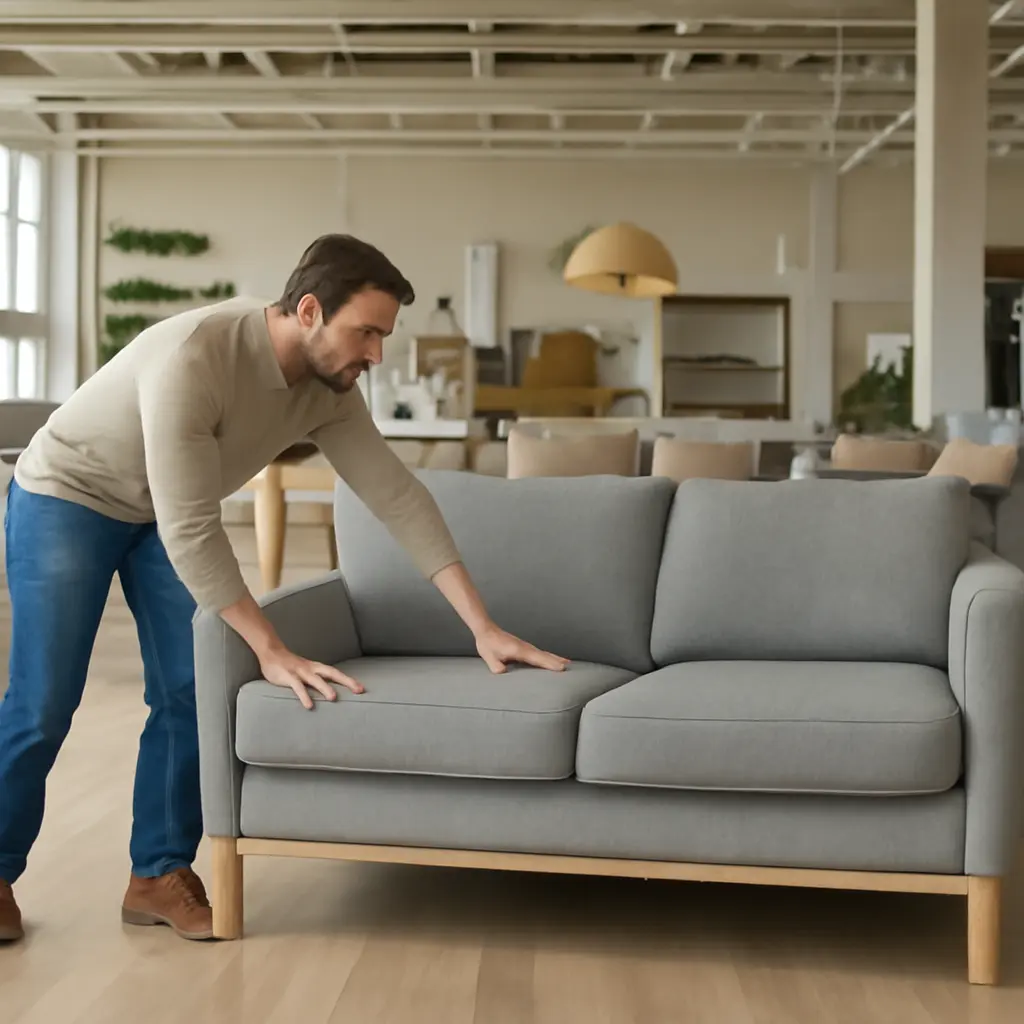
Furniture that can take a beating is furniture designed to handle frequent use, everyday spills, and the bumps of a busy home without quickly becoming uncomfortable or unsafe. For first-time shoppers, durability is less about buying the heaviest or most expensive piece and more about matching construction, materials, and care needs to the people and pets using it. The American Home Furnishings Alliance’s upholstery guidance and the Association for Contract Textiles’ performance standards offer useful ways to assess fabrics, while the U.S. Environmental Protection Agency’s waste data underscore why keeping furniture in service matters: in 2018, the United States generated about 12 million tons of furniture and furnishings in municipal solid waste, and about 80% was landfilled. Knowing how to evaluate frames, upholstery, cushions, and warranties can help shoppers choose furniture that lasts.
Durable furniture balances construction, materials, and intended use
Durability means a product can retain its useful function and acceptable condition through the stresses it is expected to face. There is no single universal furniture-durability score: performance depends on the item, how it is used, and how well it is maintained. The American Home Furnishings Alliance advises consumers to evaluate upholstered furniture by considering its frame, support system, cushions, fabric, and workmanship together—not by relying on appearance or price alone.
A sturdy sofa for a family room may need a different specification from a lightly used accent chair. Useful categories include residential furniture for everyday household use, performance upholstery designed for demanding conditions, and commercial or contract furniture intended for settings such as offices and hospitality spaces. Commercial-grade construction can be a useful reference, but it does not automatically make a piece the best value for a home: comfort, repairability, style, and replacement-part availability matter too.
Start with the demands of the room
The expected use of a piece is its practical durability specification. List the likely stresses before shopping: daily sitting, children climbing, pets scratching, food and drink spills, sunlight, moving, or heavy storage loads. A dining chair used several times a day, for example, faces repeated loading and frequent cleaning; a guest-room chair may see much less use.
Translate those demands into questions for the seller. Ask whether the piece is tested for the intended use, what cleaning methods the upholstery permits, whether cushions or covers can be replaced, and what the warranty excludes. This step connects the idea of durability to the components that determine how furniture performs.
Furniture construction determines how well pieces withstand repeated use
Construction is the way a furniture item’s frame, joints, supports, and upholstery components are assembled. In its consumer guidance, the American Home Furnishings Alliance recommends looking for a well-built frame and checking how components are joined and supported. Construction claims should be treated as evidence to verify, not as guarantees: a hardwood label alone does not reveal the quality of the joints, design, or assembly.
Frames and joints
A frame is the structural skeleton of a sofa, chair, or bed. Look for solid-feeling construction, even alignment, and joints designed to resist movement. On a sofa, sit in different places and listen for creaks or feel for twisting; on a table, check for wobble and inspect whether the legs are securely attached. These quick checks cannot predict a piece’s full service life, but they can reveal obvious weaknesses.
Ask what materials are used in the frame and where higher-stress areas are reinforced. Engineered wood is not inherently unsuitable: its performance depends on the product’s design, panel quality, joinery, and intended load. Compare the manufacturer’s stated weight limits and warranty terms rather than assuming that a particular material name guarantees strength.
Support systems and load limits
A support system transfers weight through components such as sofa springs, webbing, slats, or a platform. A seat that feels firm in a showroom may still lose support if its underlying system is poorly matched to frequent use. Ask what support system is used, whether it can be repaired, and whether the maker publishes a weight capacity for the item.
For beds and shelving, follow the stated load limits and assembly instructions. The Consumer Product Safety Commission has warned about furniture tip-over hazards, particularly involving clothing storage units. Anchor tall dressers and bookcases according to the manufacturer’s instructions, and avoid placing heavy items where they could make a unit unstable.
Cushions, seams, and repairability
Cushion durability depends on the filling, construction, and ability to recover shape—not simply on how soft the seat feels at first. Ask whether seat and back cushions are reversible, whether covers are removable, and whether replacement inserts or covers can be ordered. Inspect seams for straight stitching and consistent tension, especially at corners and other high-stress points.
Replaceable parts can extend useful life by allowing a worn cushion, cover, or component to be fixed without discarding the whole piece. Before buying, confirm that replacement parts are actually available and ask about their cost and expected availability.
Upholstery performance depends on fabric, cleaning, and exposure
Upholstery performance describes how well a fabric tolerates wear, cleaning, and environmental exposure in its intended setting. The Association for Contract Textiles uses standardized tests for performance characteristics in commercial fabrics, including abrasion and other properties. A test result is useful only when shoppers understand what it measures: abrasion testing, for example, does not by itself predict stain resistance, fading, comfort, or the lifespan of a finished sofa.
Fabric durability and abrasion ratings
Abrasion resistance is a fabric’s ability to withstand rubbing under a specified test method. The Association for Contract Textiles publishes voluntary performance guidelines for contract upholstery fabrics, including abrasion benchmarks. Those benchmarks are designed for commercial applications and should not be treated as a universal pass-or-fail rule for every residential product. Ask the retailer which test method and result apply to the fabric, and compare like with like.
Tightly woven fabrics are often practical for busy rooms because loose loops may catch on claws or jewelry. That is a selection clue, not a guarantee: fiber type, yarn construction, backing, finish, and care instructions all influence performance. If you have a pet, examine a sample closely and ask the manufacturer whether the specific fabric is suitable for claws and frequent cleaning.
Stain resistance and cleaning codes
Stain resistance refers to a fabric’s ability to resist or release stains; it does not mean a piece is stain-proof. Check the maker’s care label and cleaning instructions before purchasing. Upholstery cleaning codes commonly indicate whether a fabric should be cleaned with water-based products, solvent-based products, either method, or vacuumed only, but code definitions and approved methods should be confirmed with the product documentation.
Ask whether a protective treatment is factory-applied, optional, or covered by a separate warranty, and whether it changes cleaning requirements. Test any cleaner on an inconspicuous area only when the manufacturer permits it. Promptly blot spills rather than rubbing them, and follow the fabric maker’s instructions to avoid spreading a stain or damaging the finish.
Leather, sunlight, and everyday care
Leather varies by type, finish, and quality, so the word “leather” alone is not enough to predict wear. Ask whether the piece uses full-grain, corrected-grain, bonded, or a combination of materials, and request clear details about which surfaces are covered by each. Different finishes age and clean differently; follow the manufacturer’s care guidance rather than using a general-purpose cleaner.
Sunlight and heat can fade or dry some upholstery and finishes. Place furniture away from strong direct sunlight where practical, rotate cushions when the design permits, and use recommended care products. These simple habits connect material choice to the furniture’s everyday service life.
Furniture warranties and standards help shoppers verify claims
A warranty is a manufacturer’s written promise to repair, replace, or otherwise address specified defects under stated conditions. It is not a prediction that furniture will last for the warranty period, and it may exclude normal wear, accidents, commercial use, or improper cleaning. Read the written terms for each component because frames, mechanisms, cushions, and upholstery may have different coverage periods.
Check what a warranty actually covers
Before purchase, check who pays for shipping, labor, inspection, or in-home service, and whether the remedy is repair, replacement, or store credit. Ask how to submit a claim and what proof of purchase is required. The Federal Trade Commission’s guidance on warranties recommends reading the warranty before buying and understanding its limits; verbal assurances should be confirmed in writing.
Interpret performance claims carefully
Terms such as “heavy duty,” “performance fabric,” and “commercial grade” are not meaningful without supporting details. Request the test method, result, intended application, and care instructions. For upholstery, an abrasion figure addresses one aspect of wear; it does not establish that the furniture frame, stitching, or cushion will perform equally well.
A useful comparison chart can record the frame material, joinery, support system, fabric test information, cleaning code, parts availability, and warranty exclusions for each candidate. Comparing these details side by side is more reliable than ranking products by price or a single headline specification.
A practical buying process matches furniture to household needs
A simple buying process turns durability research into a decision. Set a budget that includes delivery and any care products, measure the room and access route, and then compare pieces against your household’s likely wear patterns. EPA data on discarded furniture and furnishings provide a broader reason to prioritize useful life and repair: extending the time furniture remains in service can reduce the need for early replacement.
Use a showroom inspection checklist
In person, sit, open, close, and inspect the piece as it will be used. A short inspection helps identify fit and obvious construction concerns, while the manufacturer’s documentation supplies information that cannot be judged by touch alone.
- Check for wobbling, creaking, uneven gaps, loose hardware, and misaligned doors or drawers.
- Test cushions for comfort and support, and ask whether covers or inserts can be replaced.
- Inspect fabric samples for weave, texture, and care instructions; ask for the relevant performance-test details.
- Confirm dimensions, weight limits, cleaning guidance, warranty coverage, and delivery access.
- For tall storage furniture, confirm that appropriate anti-tip hardware is included or available.
Compare the full cost of ownership
The purchase price is only one part of cost. Consider delivery, assembly, cleaning, replacement cushions, repair services, and how easily the item can be moved or resold. A moderately priced piece with accessible parts and clear care instructions may be a better long-term choice than a cheaper item that cannot be repaired.
For example, a household with young children might prioritize removable or cleanable upholstery, tight-weave fabric, replaceable cushions, and a stable frame. A home with pets may place more weight on snag resistance and accessible cleaning guidance. These examples are not universal prescriptions; the best specifications depend on the product and the household.
Conclusion: Buy for the wear your furniture will actually face
Furniture that lasts is the result of matching intended use to sound construction, suitable upholstery, practical care, and transparent warranty terms. Inspect frames, joints, supports, cushions, and seams; evaluate fabric claims using the test method and care guidance; and check stability and load limits. Because furniture waste is substantial, choosing repairable pieces and maintaining them well can also help keep usable products out of the waste stream. Before your next purchase, write down your household’s main stresses and compare a few candidates against the same checklist.
Sources: U.S. Environmental Protection Agency, Advancing Sustainable Materials Management: 2018 Fact Sheet, https://www.epa.gov/facts-and-figures-about-materials-waste-and-recycling/advancing-sustainable-materials-management-facts-and; American Home Furnishings Alliance, Furniture Care and Cleaning, https://www.ahfa.us/consumers/furniture-care; Association for Contract Textiles, ACT Performance Guidelines, https://contracttextiles.org/performance-guidelines/; U.S. Consumer Product Safety Commission, Anchor It! Tip-Over Prevention, https://www.cpsc.gov/Safety-Education/Safety-Education-Centers/Anchor-It; Federal Trade Commission, Warranties, https://consumer.ftc.gov/articles/warranties