
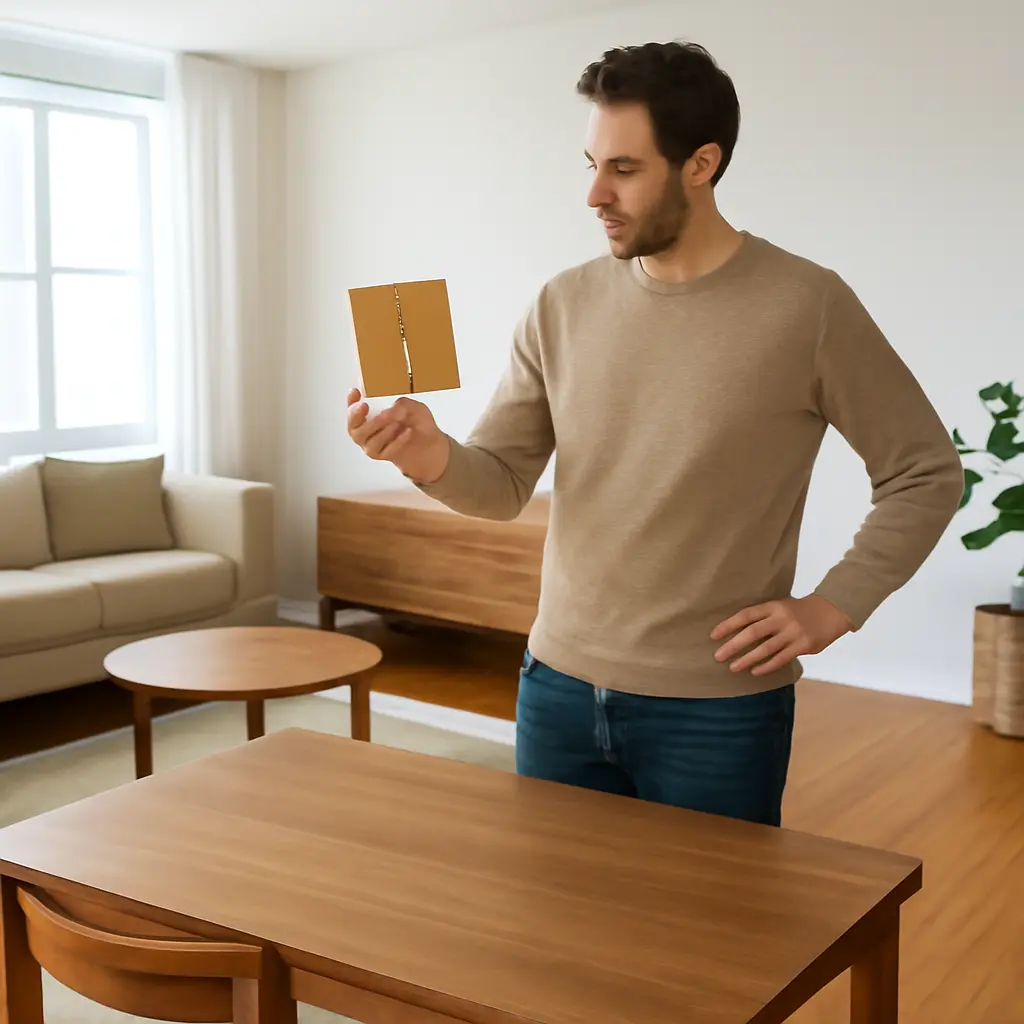
Wood furniture and flooring do not have to share the same color or finish to work together. In interior design, wood coordination is the broader practice of combining wood tones, grain patterns, and finishes so they feel intentional rather than identical. The practical takeaway is to shop for contrast, undertones, proportion, and a unifying detail—not to reject every chair, table, or cabinet that fails to match the floor. That approach is especially useful because homes commonly contain several wood surfaces, and natural materials vary even within the same species.
Wood coordination balances undertone, contrast, and repetition
Wood coordination means arranging wood elements so their differences appear considered within a room. It is not a requirement that furniture and flooring have identical color, grain, or sheen. Interior-design guidance from the National Wood Flooring Association (NWFA) emphasizes that wood species and finishes have distinct visual characteristics; even boards from the same species can vary in color and grain. A room can therefore look cohesive through relationships among its wood pieces, rather than through a perfect match.
Three useful ways to describe those relationships are undertone harmony, controlled contrast, and repetition. Undertone harmony links woods that lean warm, cool, or neutral; controlled contrast gives neighboring pieces enough difference to remain visually distinct; repetition echoes a tone or finish elsewhere in the room. These are practical design concepts, not rigid rules or a standardized color-matching formula. They help explain why a walnut table can suit an oak floor when the room includes other details that connect the two.
Undertone harmony connects unlike wood colors
An undertone is the subtle warm, cool, or neutral cast perceived beneath a surface’s more obvious color. Honey-colored oak and reddish cherry may both read as warm, while gray-washed wood and some dark, ashy finishes can read cooler. When comparing furniture with flooring, look at the underlying cast in daylight as well as under the room’s evening lighting. The Forest Products Laboratory’s Wood Handbook: Wood as an Engineering Material documents how wood’s appearance varies with species, grain, and finishing, which is why a species name alone cannot guarantee a visual match.
Controlled contrast keeps pieces from blending together
Controlled contrast means choosing tones different enough to distinguish the furniture from the floor without making their relationship feel accidental. A medium-toned table against a lighter floor, for example, can create definition; a very similar tone may cause the table legs to visually disappear. Contrast depends on more than color: grain scale, finish sheen, and the size of each surface also affect how strongly two woods differ. If the pieces already have pronounced grain, a quieter finish or a textile between them can reduce visual competition.
Repetition creates a visual bridge
Repetition is the use of a color, finish, or material more than once so the eye can recognize a connection. If a dining table differs from the floor, repeat a related tone in a picture frame, cabinet detail, lamp base, or chair legs. Repetition does not mean copying the floor exactly; it simply gives the room a visual bridge. Rugs can also separate a table or seating group from the floor while bringing in a shared accent color.
Furniture-to-floor pairings work best when judged in context
A wood pairing is the relationship between a furniture finish and the floor beneath or around it. Judge that relationship in the room rather than from a small sample or an online product image. The NWFA notes that wood’s natural variation is part of its character; lighting, surrounding colors, and finish also influence how a sample appears. Bring samples home when possible, and compare them beside the floor at different times of day.
Light and dark combinations can define separate layers
A light floor paired with darker furniture, or the reverse, makes the boundary between surfaces easier to see. This can be useful in open-plan rooms, where furniture helps define a dining or seating area without walls. Check the overall balance, however: a single very dark piece may feel isolated unless its tone appears elsewhere. A rug, artwork, or smaller accessory can distribute that visual weight.
Similar tones need differences in texture or shape
Furniture and flooring in similar shades can still work together when another feature separates them. Look for a change in grain, silhouette, surface texture, or sheen. For example, a simple table with a smooth finish can stand apart from a floor with strong, varied grain. If both tone and grain are nearly identical, a rug or contrasting chair upholstery can create definition.
Mixed species are not automatically mismatched
Different wood species can coexist because species names describe the wood, not a single guaranteed color. Oak, maple, walnut, cherry, and other woods vary by growing conditions, cut, age, stain, and finish. The U.S. Forest Products Laboratory explains that wood is a variable natural material; its handbook covers differences in structure and appearance across species. Compare the actual finished surfaces, then decide whether their undertones and contrast work in the room.
A practical shopping method prevents unnecessary matching
Shopping becomes easier when the goal is a coherent room rather than a furniture set that duplicates the floor. The Environmental Protection Agency’s guidance on indoor air quality notes that indoor pollutant sources can include building materials and furnishings, among other sources. For wood products, buyers can also consider finish, durability, maintenance, and product emissions alongside appearance. These practical checks make a purchase more useful than color matching alone.
Take reference samples and check them at home
Photograph the floor in daylight and evening light, and take a physical floor or finish sample if available. Compare the prospective furniture finish beside the sample, not against a memory of the floor. A phone photograph can help record the room, but camera processing and screen settings can shift color, so use it as a reference rather than a precise color standard.
Evaluate the whole room, not one wood-to-wood edge
Before buying, consider the walls, textiles, metal finishes, and existing wood pieces. A chair that seems too different beside a floor sample may make sense once it is paired with upholstery or a rug that repeats its undertone. Conversely, two woods that look similar in isolation may compete when their grain patterns and sheen are placed side by side. If possible, test a sample in the room and view it from the normal distance at which the furniture will be used.
Prioritize use, construction, and maintenance
A finish should suit how the piece will be used as well as how it looks. Ask about the type of finish, cleaning instructions, repair options, and whether the product is solid wood, veneer, or a combination. These construction differences affect care and longevity, but they do not determine whether a piece can coordinate with the floor. For indoor products, consumers seeking lower-emission options can review manufacturer documentation and recognized certification information rather than relying on color or marketing language alone.
Conclusion: choose a relationship, not an exact match
Wood coordination is built through undertone harmony, controlled contrast, and repetition—not identical furniture and flooring. Compare finished samples in the actual room, consider grain and sheen, and use rugs or repeated accents to connect pieces that differ. Natural wood varies, so a perfect match is often unrealistic and unnecessary. Before shopping, define the contrast and overall feeling you want, then choose furniture for its quality, function, and fit with the room. For more guidance, consult the NWFA’s consumer information and the Forest Products Laboratory’s wood reference materials.
Sources: National Wood Flooring Association, Wood Species and Grades, https://www.nwfa.org/; U.S. Forest Products Laboratory, Wood Handbook: Wood as an Engineering Material, https://www.fpl.fs.usda.gov/documnts/fplgtr/fpl_gtr282.pdf; U.S. Environmental Protection Agency, Introduction to Indoor Air Quality, https://www.epa.gov/indoor-air-quality-iaq/introduction-indoor-air-quality.