
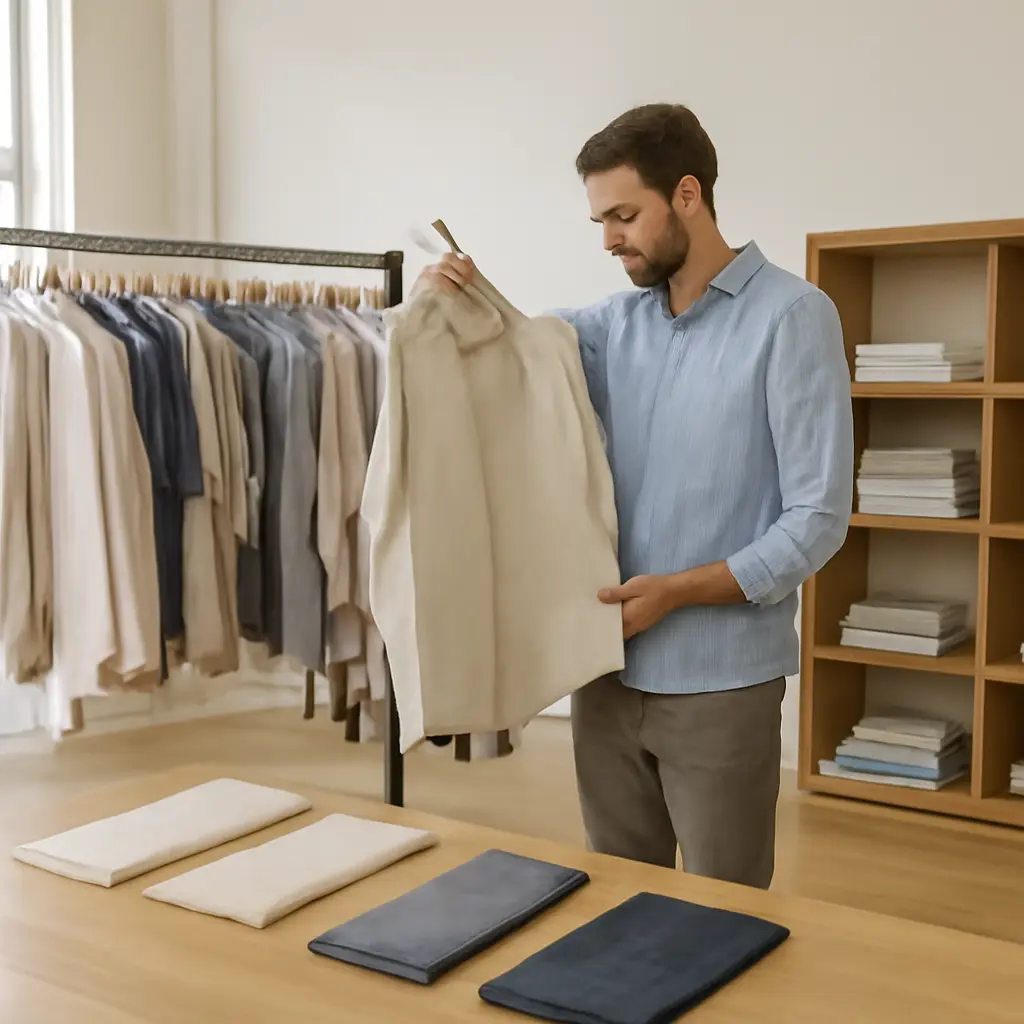
Fabric is the material made by weaving, knitting, or bonding fibers into cloth, and choosing the right fabric means balancing feel, breathability, durability, care, and appearance for the way you live. Cotton, linen, wool, silk, polyester, and blended fabrics each behave differently: fiber content influences comfort, while yarn, weave, knit, and finishing affect how a garment drapes and wears. The U.S. Federal Trade Commission requires most textile products to disclose fiber content, country of origin, and the identity of the responsible business—useful information when comparing options. This guide explains how fabric affects comfort and style, how to assess natural and synthetic fibers, and how to choose and care for clothing that suits your activities and preferences.
Fabric Comfort and Style: How Fiber and Construction Shape What You Wear
Fabric comfort is the way a textile feels and performs against the body, including its softness, breathability, stretch, warmth, and ability to manage moisture. The American Association of Textile Chemists and Colorists (AATCC) develops standardized test methods for textile properties such as colorfastness and moisture management, helping the industry assess performance beyond appearance. For everyday decisions, the label is a starting point rather than a complete verdict: fabric construction and garment design also matter.
A useful comparison begins with three connected questions: What fiber is it made from? How is the fabric constructed? What conditions will it face? A loose linen weave may feel cooler than a dense linen canvas; a knitted cotton T-shirt stretches more readily than woven cotton poplin. The sections below connect these distinctions to practical choices for climate, activity, style, and care.
Fiber content: the material behind the feel
Fiber content identifies the materials making up a textile, typically expressed as percentages on a garment label. The Federal Trade Commission’s textile labeling rules require most covered apparel and household textile products to disclose generic fiber names and percentages. That makes it possible to compare, for example, a shirt labeled 100% cotton with one containing a cotton-polyester blend, although the percentages alone do not describe weave, weight, or finishing.
Natural fibers such as cotton, linen, wool, and silk come from plants or animals. Manufactured fibers include synthetics such as polyester and nylon, as well as regenerated cellulosic fibers such as rayon and lyocell. These broad categories are helpful, but they are not a simple ranking of comfort: the best option depends on the garment’s construction, the wearer’s sensitivity, the weather, and intended use.
Fabric construction: why the same fiber can feel different
Construction describes how fibers and yarns are assembled into fabric. Woven fabrics, including poplin and denim, are made by interlacing yarns; knitted fabrics, including jersey and rib, use loops that often provide more natural stretch. Nonwoven fabrics are bonded or entangled rather than conventionally woven or knitted. This distinction helps explain why two cotton garments can differ in flexibility, airflow, weight, and drape.
Weight, yarn structure, weave density, and finishing also affect performance. A lightweight, open construction may allow more airflow, while a dense or brushed fabric can feel warmer. Finishes can alter softness, wrinkle resistance, or water repellency, but their effects vary by product and may change with repeated washing. A fabric description should therefore be read alongside the garment’s cut and care instructions.
Natural and Manufactured Fibers: Matching Fabric to Comfort Needs
Fiber categories are useful for narrowing choices, but each category includes fabrics with different properties. The International Wool Textile Organisation describes wool as naturally crimped, which helps wool fabrics trap air; cotton and linen are plant-based fibers, while polyester is a synthetic polymer fiber. These characteristics offer clues, not guarantees. A practical selection weighs the fiber’s typical behavior against the garment’s purpose and the wearer’s priorities.
Cotton and linen: familiar plant-based options
Cotton is a soft plant fiber commonly used in T-shirts, shirts, underwear, and bedding. Its comfort depends on factors such as yarn, knit, and fabric weight. Cotton jersey is often chosen for casual stretch and softness, while tightly woven cotton can hold a more structured shape. Cotton can absorb moisture, but it may take time to dry, so a wet garment can feel heavy during sustained activity.
Linen is made from flax and is often selected for warm-weather clothing because many linen fabrics are lightweight and have a crisp, airy character. Its relaxed wrinkles are part of its familiar appearance, though that texture may not suit someone seeking a smooth, formal finish. A linen blend can soften the look or change drape, but the result depends on the blend ratio and construction. For instance, a loose linen shirt can suit a hot-weather commute, whereas a heavier linen jacket may be better for structured styling than peak heat.
Wool and silk: natural fibers for warmth and refinement
Wool fibers and fabrics are valued for warmth and their ability to regulate comfort across changing conditions. The crimp in wool fibers helps create air spaces in wool textiles, while fabric thickness and knit structure determine how warm a particular sweater or coat feels. Merino wool is often used in base layers and knitwear because it can be made into relatively fine fabrics. People with sensitive skin should test the specific garment, since comfort varies with fiber fineness, finishing, and personal sensitivity.
Silk is a natural protein fiber associated with a smooth hand and fluid drape. It is used in blouses, dresses, scarves, and linings, but its care requirements can be more demanding than those of everyday cotton basics. Check the care label before washing; dyes, finishes, and garment construction can affect whether a silk item is washable or requires professional care. Silk may be a good choice for a dressy occasion, while a washable synthetic or cotton alternative may be more convenient for frequent wear.
Polyester, nylon, and regenerated cellulosic fibers
Polyester and nylon are synthetic fibers widely used in activewear, outerwear, linings, and durable everyday garments. Their performance depends on yarn and fabric design: a lightweight polyester knit can be made for athletic use, while a dense woven polyester may suit a jacket. Synthetic fibers can dry relatively quickly, but moisture handling and comfort vary among products. Look for specific product claims and construction details rather than assuming every garment made from one fiber performs the same way.
Rayon, lyocell, and related regenerated cellulosic fibers are manufactured from cellulose and can be designed for a soft hand and flowing drape. They often appear in shirts, dresses, and blends. Their strength, shrinkage behavior, and care needs depend on the particular fiber and fabric structure, so the garment label matters. The Federal Trade Commission’s required generic fiber naming helps distinguish these materials from cotton and from synthetic fibers such as polyester.
Choosing Fabric for Climate, Activity, and Personal Style
After identifying fiber and construction, match the fabric to the situation. The U.S. Environmental Protection Agency explains that clothing choices are one way to adapt to temperature conditions, alongside changes to indoor settings and activity. In practice, layering and garment coverage can be as important as fiber: a breathable shirt under a removable layer offers more flexibility than a single heavy garment when temperatures fluctuate.
Warm weather and everyday comfort
For warm conditions, consider lightweight fabrics, a comfortable fit, and constructions that allow airflow. Cotton, linen, and some lightweight regenerated cellulosic fabrics are common choices for casual summer clothing. However, color, weave, garment looseness, and sun exposure also affect comfort. For outdoor activities, choose clothing that suits the activity and check whether the garment offers specific sun-protection information rather than relying on fiber name alone.
A real-world comparison: a person walking to work in warm weather may prefer a loose linen or cotton shirt for airflow and a relaxed appearance. Someone exercising in the same conditions may prioritize a lightweight technical knit designed for movement and moisture management. These are not universal rules; the best test is how the fabric feels and performs during the actual activity.
Cold weather, layering, and activity
For cold conditions, warmth depends on insulation, coverage, fit, and layering. Wool sweaters, fleece, and insulated outerwear can all contribute, but they serve different roles: a base layer sits next to the skin, a middle layer adds warmth, and an outer layer helps protect against wind or precipitation. The U.S. National Weather Service advises people to dress in layers in cold weather, since layers can be added or removed as conditions and activity change.
During strenuous activity, a very warm fabric may become uncomfortable if it traps too much heat or moisture. A practical system might combine a comfortable base layer, an insulating layer suited to the forecast, and a protective shell when needed. Check fit at the shoulders, elbows, and waist so layering does not restrict movement.
Style, drape, and fit
Drape is the way fabric falls and forms around the body. Fluid fabrics such as many silks and rayon textiles tend to create softer lines, while sturdy denim, canvas, and structured cottons hold their shape more readily. A fabric’s surface—matte, shiny, smooth, textured, or brushed—also changes how formal or casual an outfit appears. These qualities should be considered together with the garment’s pattern and fit.
When shopping, touch the fabric where possible, move in the garment, and examine areas that will experience strain. A jacket should allow comfortable arm movement; trousers should sit and bend comfortably; a blouse should not pull across the closures. If shopping online, use the fiber and care details, product measurements, and return policy to reduce guesswork.
Fabric Care and Durability: Keeping Clothing Useful Longer
Durability is a fabric’s ability to withstand use and care without unacceptable damage, while garment longevity also depends on construction, fit, and repair. The care label provides the manufacturer’s instructions for washing, drying, ironing, and other treatment. Following it can help prevent shrinkage, color loss, or damage, especially for garments made from delicate fibers or complex blends.
Read care labels before buying
Care instructions are part of a garment’s practical cost. A delicate item that requires special cleaning may be less convenient than a machine-washable alternative, even if both look similar. The Federal Trade Commission’s Care Labeling Rule requires care instructions on covered textile apparel, based on a reasonable basis for the recommendation. Before purchase, consider whether the recommended care fits your time, budget, and laundry routine.
For example, a frequently worn work shirt may be more useful if it can be washed at home and resists wrinkling, while a special-occasion silk blouse may justify more careful maintenance. Avoid assuming that a fabric is easy-care based only on its fiber name; coatings, blends, dye, and garment construction can change the care requirements.
Wear, repair, and make considered purchases
A durable choice is one that performs well for its intended use and remains wearable after repeated use and care. Check seams, hems, closures, and stress points in addition to fabric feel. The Ellen MacArthur Foundation’s work on circular fashion highlights the value of keeping products in use through practices such as reuse and repair. Mending a loose seam or replacing a button can extend a garment’s useful life, though the actual result depends on garment condition and repairability.
When comparing two similar items, ask how often you expect to wear each, whether it works with clothing you already own, and how straightforward it is to clean or repair. A versatile garment that is comfortable and cared for properly may serve better than a trend-driven item that rarely leaves the closet.
Conclusion: Select Fabric That Fits Your Life
Fabric choice comes down to the relationship between fiber, construction, climate, activity, style, and care. Fiber labels identify the material; weave and knit affect feel and movement; fit and layering shape comfort; care requirements influence how practical a garment will be over time. Cotton and linen can suit relaxed warm-weather wear, wool can support cold-weather layering, silk and regenerated cellulosics can offer fluid drape, and manufactured fibers can be engineered for particular uses.
Use the garment label as a reliable starting point, then consider how the piece feels, fits, and functions in your routine. Compare care instructions before buying, and choose clothing you are likely to wear and maintain. For further guidance, consult the Federal Trade Commission’s textile-labeling and care-labeling information, AATCC textile testing resources, and the National Weather Service’s cold-weather safety advice.
Sources: U.S. Federal Trade Commission, Threading Your Way Through the Labeling Requirements Under the Textile and Wool Acts, https://www.ftc.gov/business-guidance/resources/threading-your-way-through-labeling-requirements-under-textile-wool-acts; U.S. Federal Trade Commission, Care Labeling Rule, https://www.ftc.gov/legal-library/browse/rules/care-labeling-rule; American Association of Textile Chemists and Colorists, Test Methods, https://www.aatcc.org/test-methods/; International Wool Textile Organisation, Wool Facts, https://iwto.org/wool/; U.S. Environmental Protection Agency, Climate Change and Your Health, https://www.epa.gov/climateimpacts/climate-change-and-your-health; National Weather Service, Cold Weather Safety, https://www.weather.gov/safety/cold; Ellen MacArthur Foundation, A New Textiles Economy: Redesigning Fashion’s Future, https://ellenmacarthurfoundation.org/a-new-textiles-economy.